

What is your clinical response when….
What do you do when a guardian comes to you with a “behavioral change” that only happens during their own therapeutic psilocybin sessions?
If you’ve been following our community discussions over the past years - you’re ready! Follow along with this case and test your clinical preparedness in the emerging psychedelic substance exposure landscape.
How would you respond?
Is this psychedelic-substance related? How would you differentiate between human-animal bond mediated and a primary medical or care issue?
In this clinical case discussion, the VeterinaryPsy discussion group tackles a human-adjacent exposure case in a household canine - listen in!
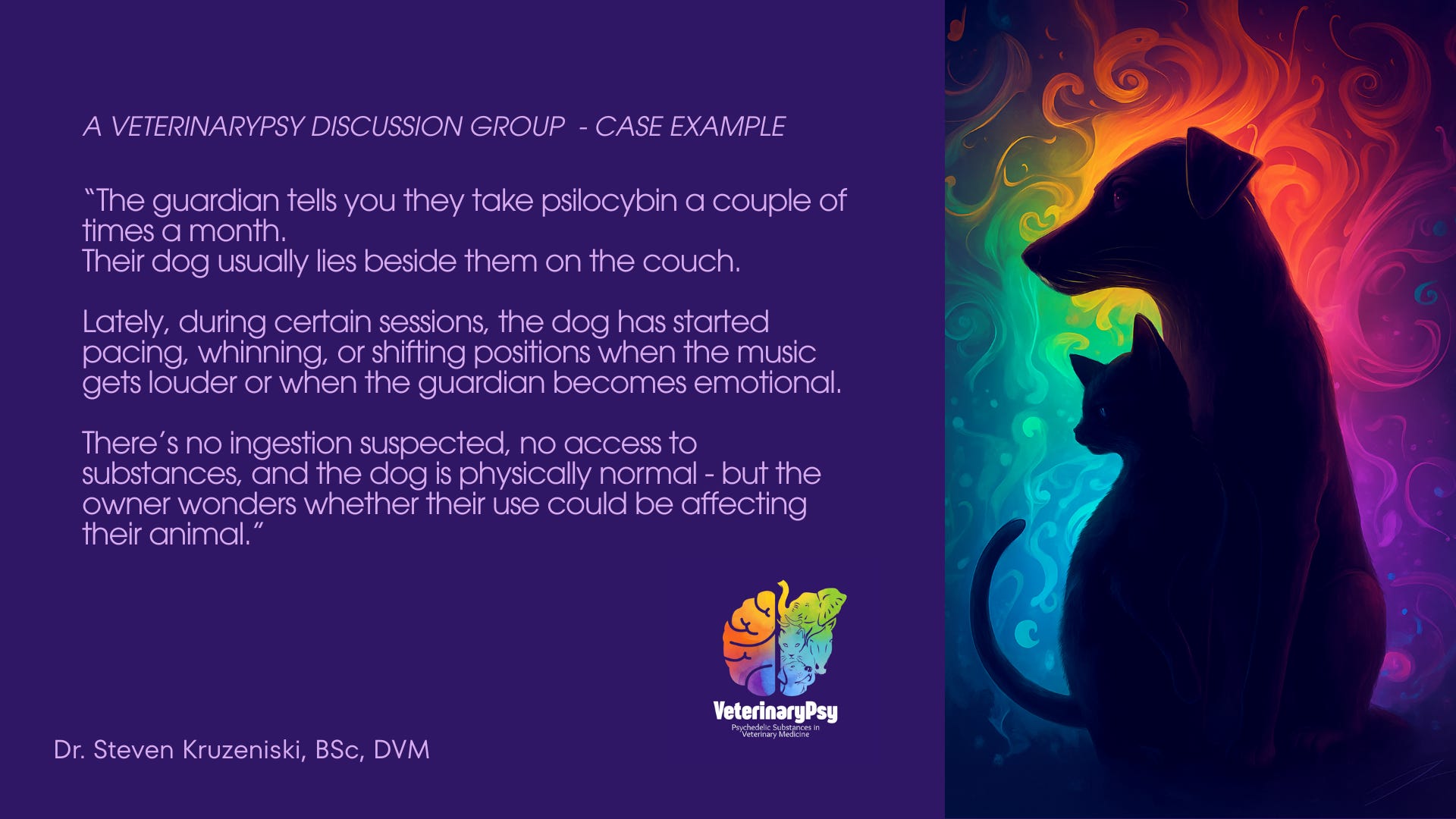
As advocates for both human and non-human wellbeing, we know that the energetic and emotional shifts during a ceremony can be profoundly distressing for a pet.
This isn’t just an anecdotal observation; research on emotional contagion shows that dogs mirror the long-term stress and immediate emotional states of their human companions.
This case highlights the vital role of the veterinary professional as a non-judgmental facilitator of harm reduction and animal safety within the family unit.
In this case debrief, our team explores:
Behavioral mirror and emotional contagion: Analyzing how dogs sense emotional dysregulation, shifting music, and “energetic shifts” during a session, leading to pacing and whining.
Spectrum of care: This framework as essential for all family-unit focused practice models. We discuss presenting multiple options to the owner—ranging from a professional facilitator for the human to a dedicated “pet-sitter” or a quiet, separate space for the animal to ensure their autonomy and safety.
Practical harm reduction: Practical advice for guardians, from creating “checklist” safety protocols to ensuring substances (especially those containing chocolate) are securely stored.
Safety in use of CBD: We discuss important elements of safety and caution around using CBD or THC “adjacent” to sessions, and the importance of building self-regulation behaviors rather than relying on a chemical “quick fix.”
Upscale Your Clinical Preparedness
As psychedelic-assisted therapies become more common, our roles as veterinarians and care professionals must evolve to meet these new household dynamics. We invite you to investigate our free clinical resources or join our specialized clinical preparedness training to ensure your team is ready to handle these complex conversations.
Harm Reduction Education (HRE) for Animal Guardians
Find resources for animal guardians on our website HERE.

Access Clinical Response Tools
Clinical Response Algorithm | Psychedelic Exposures in Animals. Access the Algorithm HERE.
Exposure Survey (anonymous). Access the Survey HERE.
Clinical Resources & Training:
Increase your own and your team’s clinical preparedness. Check out our self-paced courses or sign up for our clinic training session.
Join the Conversation:
Have you encountered “second-hand” emotional distress in your patients?
How are you balancing the ‘Spectrum of Care’ when an animal is physically healthy but psychologically distressed by the home environment?
Are you seeing an increase in ‘adjacent’ effects in animals of the mental health of their human guardians in your own practice?
Tell the community about your experience, your clinical treatment pathway, and the case outcome in the chat!


